
How the DPDP Act 2023 & Section 65B Reshape Corporate Evidence
Navigating Statutory 6-Hour Breach Notifications, Data Principal Protections, and Defensible Courtroom Record Certification.
Executive Summary & Key Takeaways
- 01The DPDP Act mandates rigorous technical safeguards and immediate personal data breach reporting to the Data Protection Board of India.
- 02CERT-In 6-hour statutory reporting directions require real-time forensic triage capabilities to determine incident scope and data leakage.
- 03Electronic evidence certification under Section 63/65B requires technical affidavits detailing hash algorithms, system logs, and lawful custody.
1. The Convergence of Privacy Regulations and Forensic Admissibility
Organizations operating in India and managing global cross-border data flows face a unified regulatory landscape where data governance and digital forensic capabilities are intertwined.
Under the DPDP Act 2023, Significant Data Fiduciaries (SDFs) are subject to stringent data audit requirements, data protection impact assessments, and strict penalties for failure to prevent breaches. When an unauthorized access event occurs, establishing the exact scope of personal data exfiltration requires instant forensic log parsing.
- Statutory penalties up to INR 250 Crores for failure to take reasonable security safeguards.
- Mandatory notification to both the Data Protection Board and affected Data Principals.
- Need for defensible technical evidence proving containment and minimal exposure.
2. Section 65B & BSA 2023 Electronic Evidence Certification
For electronic records—such as server logs, email communications, ERP audit trails, and surveillance footage—to be admissible in Indian judicial proceedings, they must be accompanied by an authoritative statutory certificate.
The certifying authority must affirm that the computer system was operating properly during the relevant period, that the output reproduces authentic stored data, and that cryptographic hashes guarantee zero manipulation.
“A generic IT department printout without cryptographic verification and documented chain-of-custody is liable to be rejected by courts during evidentiary scrutiny.”
3. Building a Defensible Corporate Governance Framework
To satisfy both DPDP obligations and evidentiary requirements, enterprise legal and CISO offices must deploy automated audit logging, immutable storage for forensic syslogs, and pre-negotiated forensic retainer agreements for rapid breach validation.
Statutory Defensibility & Regulatory Standards
| Framework / Legislation | Section / Clause | Forensic Relevance |
|---|---|---|
| Digital Personal Data Protection Act, 2023 | Sections 8, 9 & 10 | Obligations of Data Fiduciary and reasonable security safeguards |
| Bharatiya Sakshya Adhiniyam, 2023 | Section 63 | Admissibility of electronic records and mandatory technical certification |
| Information Technology Act, 2000 | Section 43A / 72A | Compensation for failure to protect sensitive personal data |
Related Services & Solutions
Facing a Similar Digital or Legal Matter?
Speak directly with our senior examiners under strict confidentiality.
Request ConsultationRelated Insights
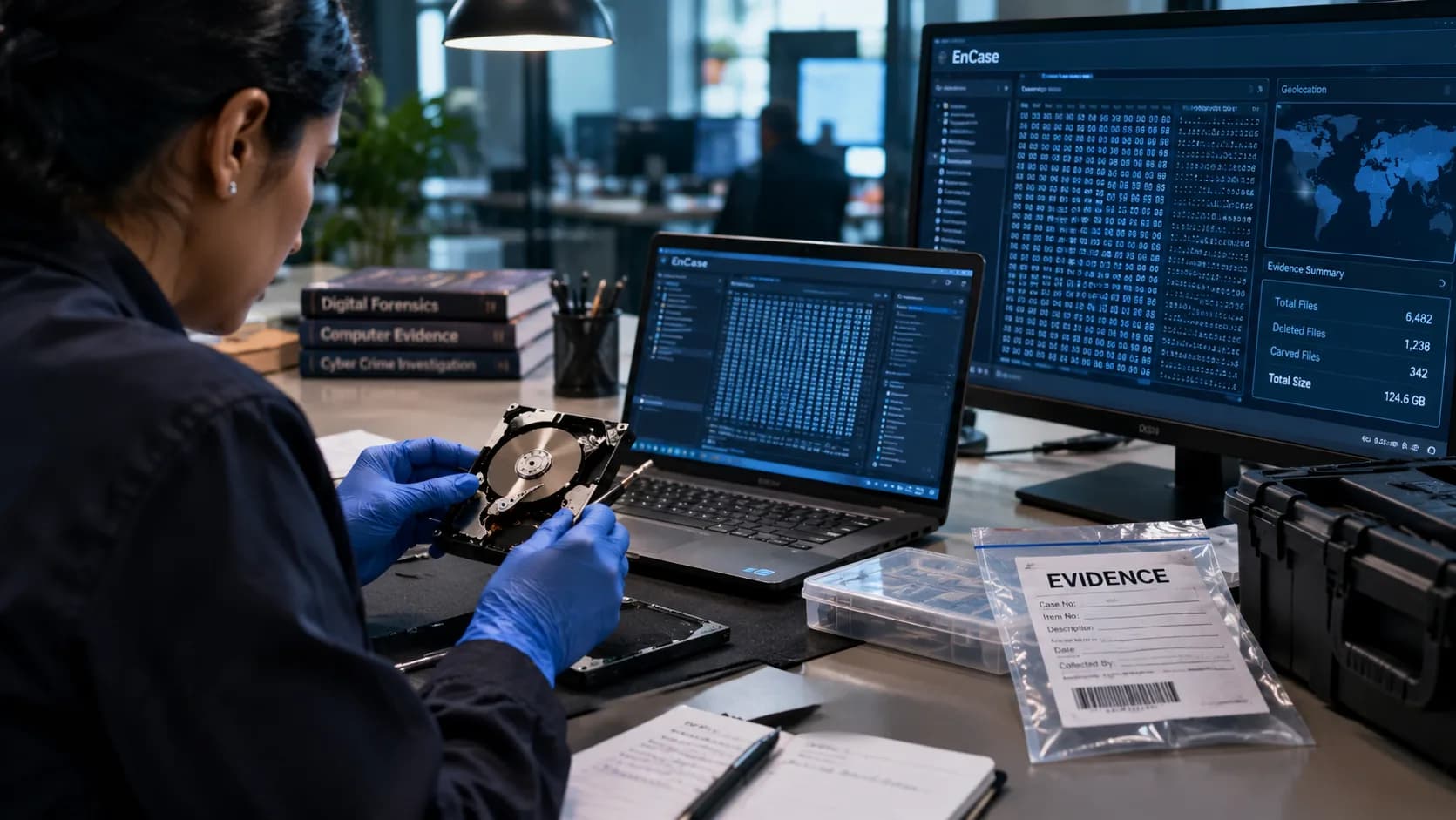
The Next Generation of Global Digital Forensic Discovery
As enterprise infrastructure disperses across multi-cloud regions, hybrid data centers, and encrypted endpoints, digital forensics requires unprecedented discipline. This research explores modern bit-stream imaging protocols, cryptographic integrity verification, and legal defensibility under updated evidentiary frameworks.

Enterprise Incident Response & Volatile Memory Extraction
When high-velocity ransomware strikes, conventional system shutdowns destroy crucial volatile memory artifacts, active network sockets, injected DLLs, and decrypted payload keys. This white paper details how rapid live RAM triage preserves critical IOCs while executing immediate containment within 90 minutes.